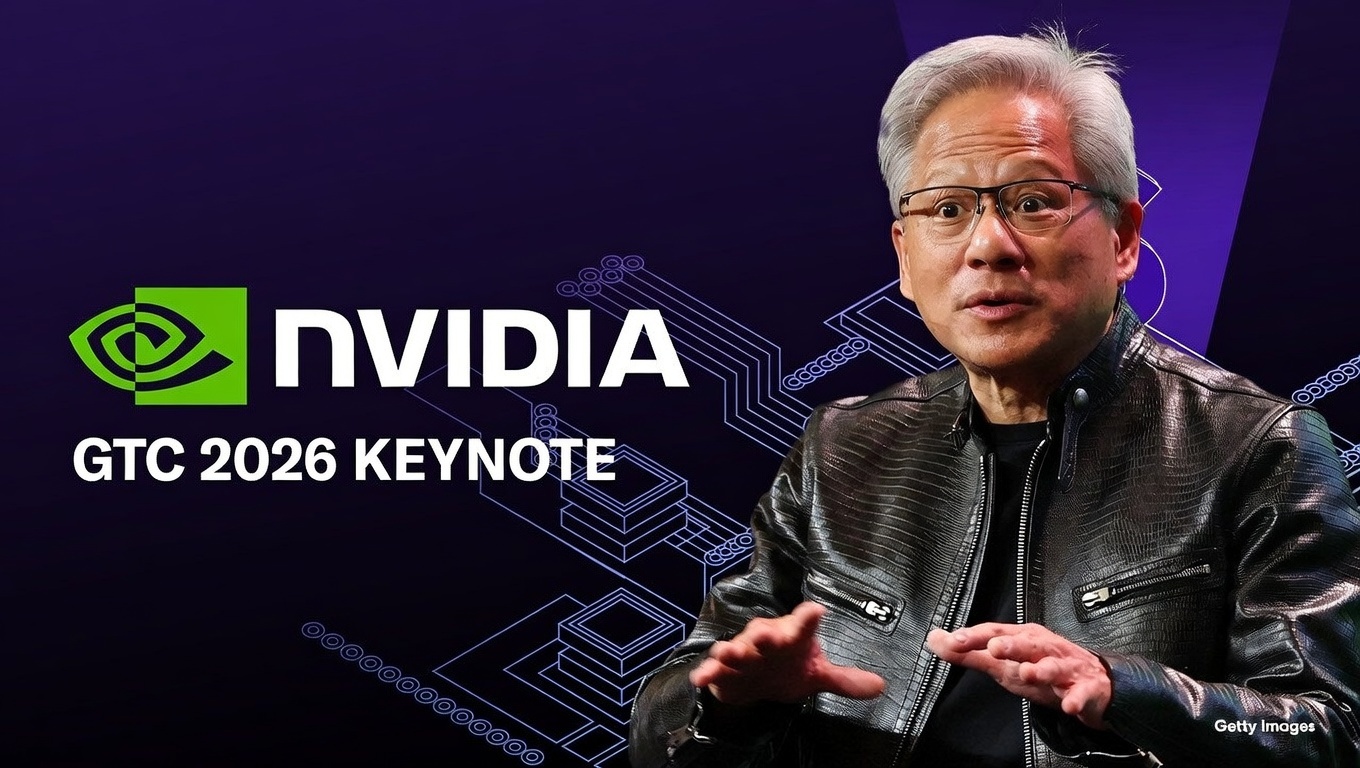
NVIDIA GTC 2026 keynote with Jensen Huang
Standing on stage at a packed SAP Center, NVIDIA CEO Jensen Huang delivered a message that was less about hardware, and more about the fundamental restructuring of the global economy. "Computing used to be retrieval-based, now it is generating". Huang noted.
Moving into 2026, NVIDIA is repositioning itself from a chip vendor to an AI factory operator for the world. The AI boom isn't slowing down, it is just getting started. And NVIDIA is betting everything on being the company that powers it all.
$1 trillion in AI spending is coming
NVIDIA now projects that orders for its newest chips and system could hit $1 trillion cumulatively by 2027 - double what they estimated just a year ago. The reason is companies are not just experimenting with AI any more. They are building massive AI factories - dedicated infrastructure designed to run AI at industrial scale. Jensen tied this directly to the "inference inflection point" having arrived - shifting from training-heavy 2024-2025 to massive-scale deployment/inference in 2026+.
Meet Vera Rubin - the agentic powerhouse
The biggest hardware reveal was the Vera Rubin platform, the successor to their current Blackwell chips. It is not just a faster GPU - it is an entire computing stack built from the ground up for the AI era.
Vera Rubin includes new graphics chips with next generation memory (HBM4), a brand new CPU called Vera designed specifically for AI agents, advanced networking and full rack scale systems built for massive deployment.
But Jensen and NVIDIA did not stop at Rubin. They also teased a future architect called "Feynman" for 2028... Yes, really.
Token are the new currency
One of the most interesting shifts in Jensen message was reframing what matters in computing. Not teraflops or gigahertz. The new metric is token - the building blocks of everything an AI system produces, from text to decision to action.
The data centers are now redefining as AI factories that produce intelligence via tokens. Going forward, business leaders will track how many tokens their system can produce per second, how efficiently they do it per watt of power. It is a fundamental rewrite of how we think about computing performance.
Agentic AI era officially begins
Jensen declared the arrival of the Agentic AI era, comparing it to landmark shifts like Linux or http. We have entered the period where AI doesn't just answer questions, but take actions, plan ahead and operates autonomously.
He emphasized that every company on earth now needs an "OpenClaw" strategy, effectively endorsing this open-source framework as the global standard for building autonomous digital workers.
NVIDIA has partnership with Uber for autonomous systems and Disney Imagineering, which showed off eerily lifelike robots - including a demo of Olaf's from Frozen - built using NVIDIA physical AI platform.

What we are witnessing is not just another technology cycle - it is the redefinition of infrastructure, productivity and value creation itself. The shift from computing as a tool to computing as a generator of intelligence marks a turning point on par with the internet and mobile revolutions.
In Asia, as AI factories rise and agentic systems become embedded across industries, the need for trusted ecosystems, regulatory dialogue and cross-border partnerships becomes critical. The winner will not just be those with the most powerful models, but those who can deploy them responsibly, at scale, and with real-world impact.
AI era is no longer coming. It is being built - right now.
Join AWAA community and be part of the builders defining the future of AI in Asia.
